Geosynthetic clay liner
A roll-out waterproofing liner based on bentonite clay.
A flexible mat that hardens after hydration according to the manufacturer’s instructions.
Discuss your project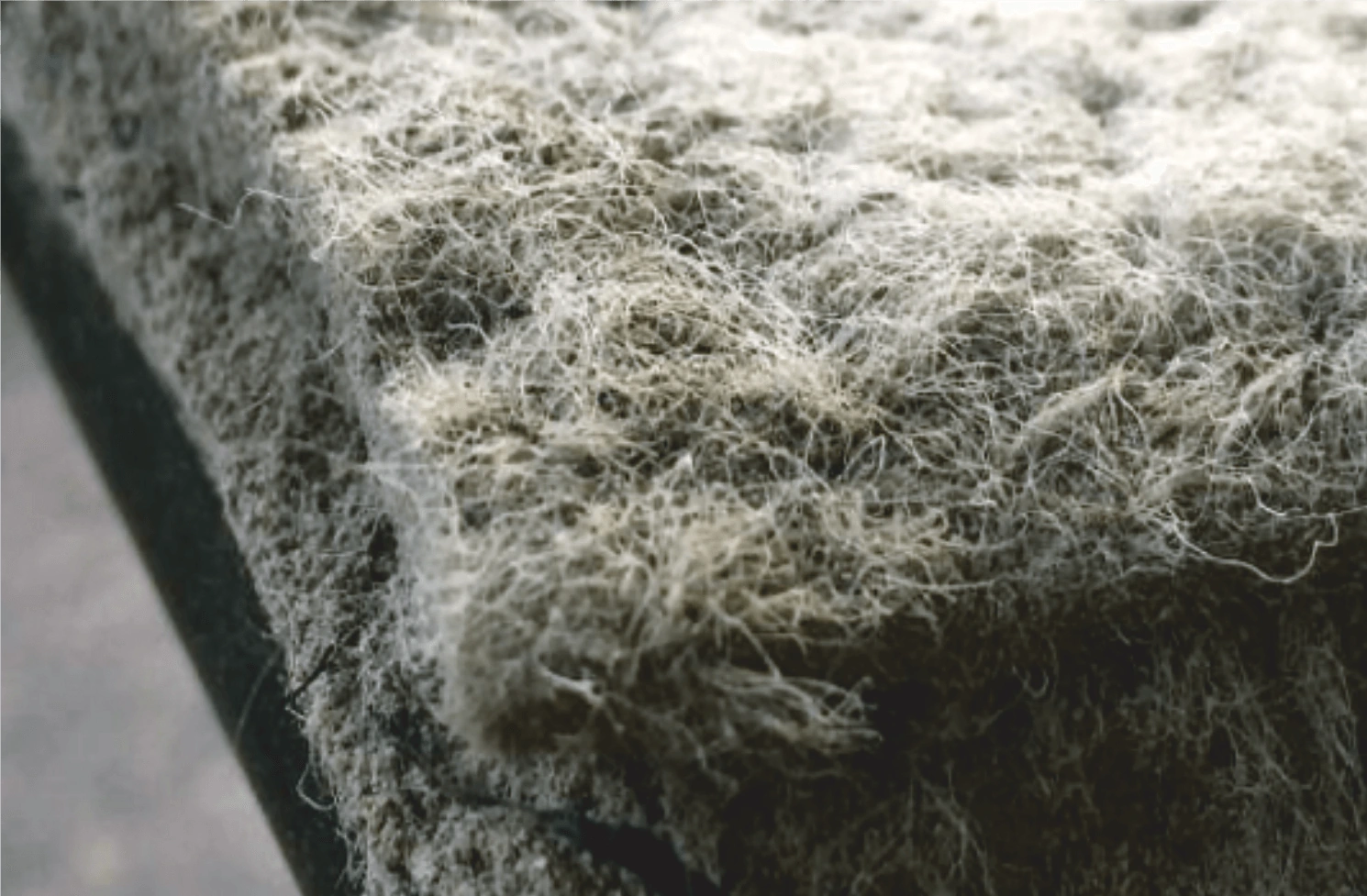
The cement-containing mat is placed on a prepared substrate, secured and hydrated. It cures to create a protective layer. Select the version for the operating conditions and the geometry of joints and edges. ТОО «KazPolimer Engineering» · kazpolimer.kz
Read the detailed description Applications
 Benefits
 Installation
| Property | T5 | T8 | T13 |
|---|---|---|---|
| Thickness, mm | 5 | 8 | 13 |
| Mass before hydration, kg/m² | 7 | 12 | 19 |
| Tensile strength, longitudinal / transverse, kN/m | 6.7 / 3.8 | 6.8 / 6.6 | 19.5 / 12.8 |
| Catalogue roll size, m | 2 × 20 | 2 × 20 | 2 × 20 |
Data are for the listed variants in the KazPolimer catalogue. Confirm the grade, fixings, joint type and hydration procedure against the design, product data sheet and manufacturer's instructions.
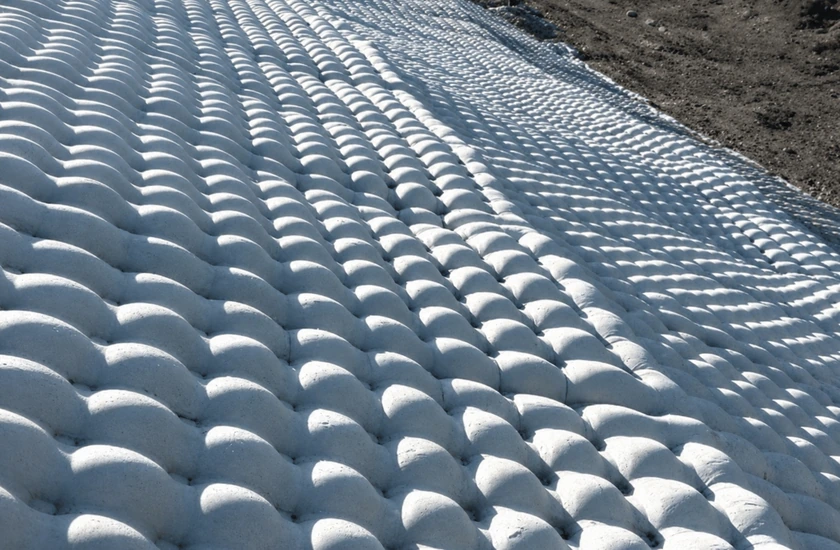
A cementitious geosynthetic mat is a flexible rolled composite containing a dry cementitious mix distributed within the material. While dry, it can be positioned and cut to match the profile of a prepared surface. Adding water starts cement hydration and the mat hardens as it cures. The format suits long areas where an erosion-resistant facing is needed and where bringing conventional concrete handling equipment to every part of the site may be difficult.
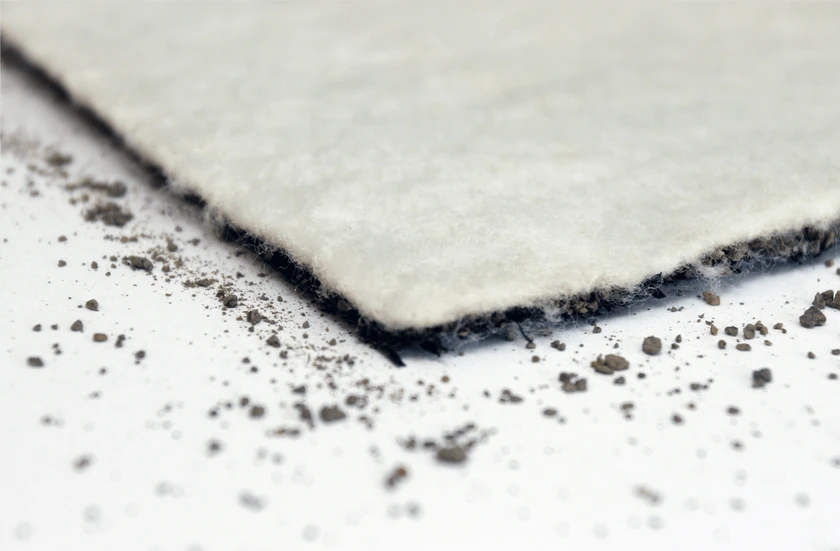
The constituent layers and properties after curing depend on the grade. Consider thickness, mass before hydration, abrasion performance and flexural properties when reviewing alternatives. Where the lining is also expected to restrict seepage, examine the backing, the specified permeability and the way joints are made. An uninterrupted sheet and a connection to a drainage or concrete structure can have different hydraulic behaviour.
These mats can line drainage ditch beds and sides, protect eroding slopes and cover surfaces exposed to concentrated runoff. At a road site, the lining may be intended to maintain a ditch’s cross-section while it conveys stormwater and snowmelt. At an industrial site, the elevations at a collecting structure and the outlet to which it connects can be especially important. The finished lining should suit the route the water is intended to follow.
Conditions often vary along the same channel. Bends, changes in grade, pipe crossings and transitions to bare ground need their own details. For slope work, show the crest and toe on the drawing and identify where water comes from and where it leaves the protected area. In an existing ditch, first investigate the reasons for deterioration. A settling foundation or a scour pocket at an outlet can increase the preparation needed before a new facing is installed.
Use the selected grade’s current technical documentation to check it against the project requirements. For a ditch, consider the section, longitudinal slope, design flow and potential abrasion from sediment. On a slope, assess the stability of the ground, length along the slope, access at the crest and possible entry of water beneath the lining. Where a panel meets a pipe, fitting or wall, settle the connection detail before ordering material.
Choose roll widths and cut lengths with the surveyed surface, handling space and joint positions in mind. Allow for overlaps, cuts around obstacles, end detailing and material secured into edge restraints. A ditch can keep a constant width on plan while its lined surface area varies because the side slopes change. Take quantities from a developed surface layout that includes the bed, both sides and the full edges of the lining.
Bring the surface to the design levels and remove loose material and objects that could damage the mat. Deal with voids and unevenness as specified for the substrate. Check the channel section for steps or hollows that would alter the intended flow path. Position the strips, secure them and form the joints according to the drawing and product instructions. Verify the overlap orientation with the direction of flow, particularly near an outlet or at the end of the lined area.
Supply water as required by the instructions for the selected grade. Hydration requirements depend on the material, temperature and drying conditions. Consider wind, direct sun and rain when planning the work. In cold conditions, check the permitted application conditions and any protection needed during curing. Record when each work area was placed and hydrated so the inspection and timing of flow through the channel can be coordinated.
For phased work, mark where each shift will stop and how the exposed edge will be protected until the next strip is placed. This is particularly useful on live drainage systems, where a temporary diversion may be needed while the lining cures.
Inspect exposed edges and transitions where runoff may get beneath the facing. At the joints, check contact between sheets and verify their connections and restraints. At the interface with neighbouring surfaces, make sure water will travel in the direction provided for in the design. During service, inspect the ditch after significant runoff for scour, accumulated sediment or damage. Early detection at an outlet can help protect the adjacent lined sections.
For a supply enquiry, send KazPolimer the site layout, ditch or slope sections, working length, junction geometry and service requirements. Note the proposed season, access to hydration water and unloading constraints. Ask how the roll’s effective coverage relates to the cutting and overlap plan and which components are included for joints and edges. Match the documented properties of the proposed grade to the design before accepting the final quantities.
It is a flexible roll containing a dry cementitious mix. After placement and hydration according to the instructions, it hardens into a rigid protective lining.
It can line drainage ditches and protect slopes from runoff erosion. Select the grade to suit the loads, foundation and anchoring details.
The catalogue lists 5, 8 and 13 mm options. Confirm thickness, strength, weight and roll size on the data sheet for the selected grade.