
Temporary road mats
Modular polymer mats for temporary access routes and working areas.
Discuss your project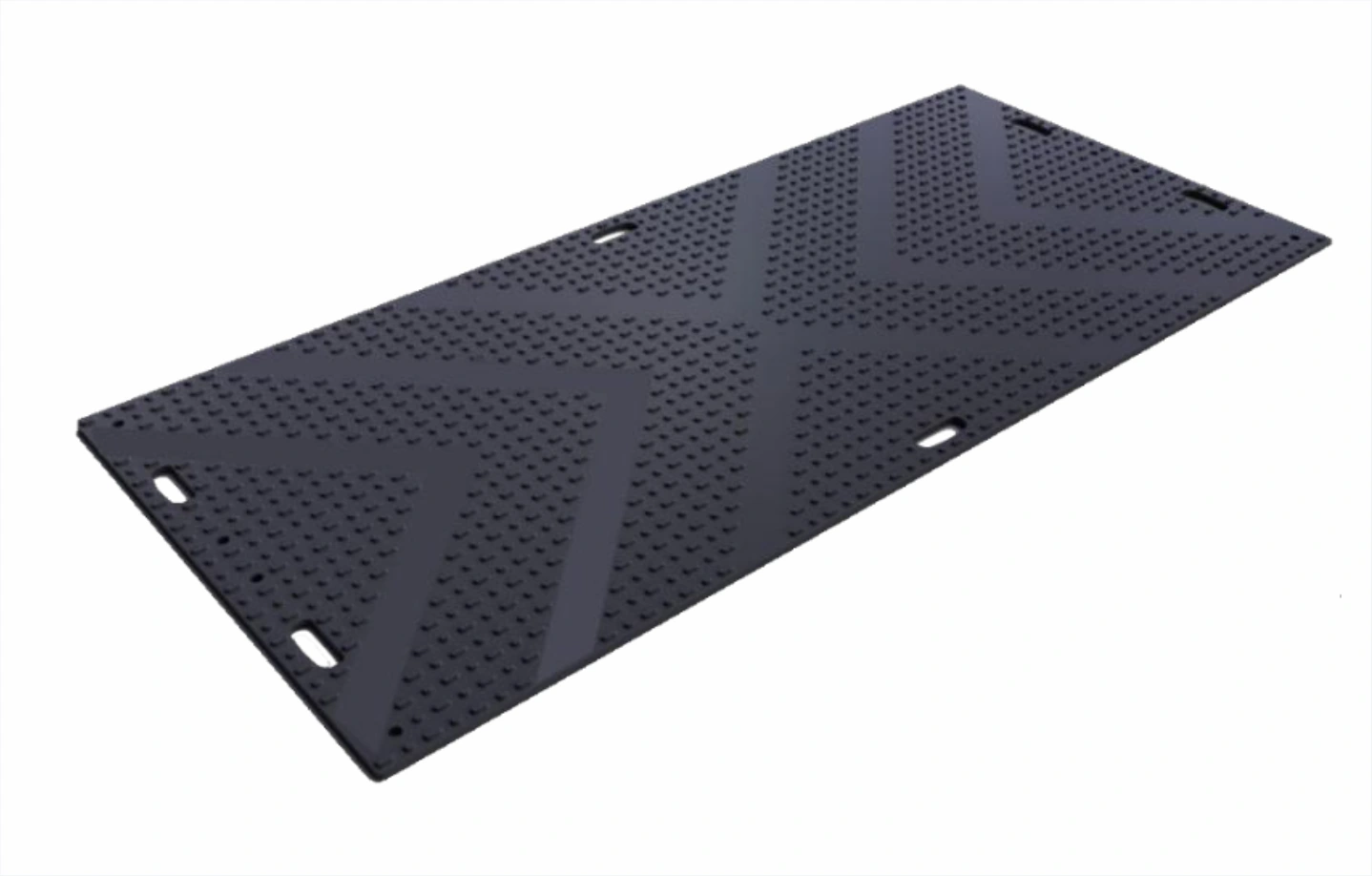
Interlocking mats are laid on site to create a temporary vehicle route or working area. The layout and connectors depend on the ground conditions, loading and vehicle dimensions. ТОО «KazPolimer Engineering» · kazpolimer.kz
Read the detailed descriptionPhotos
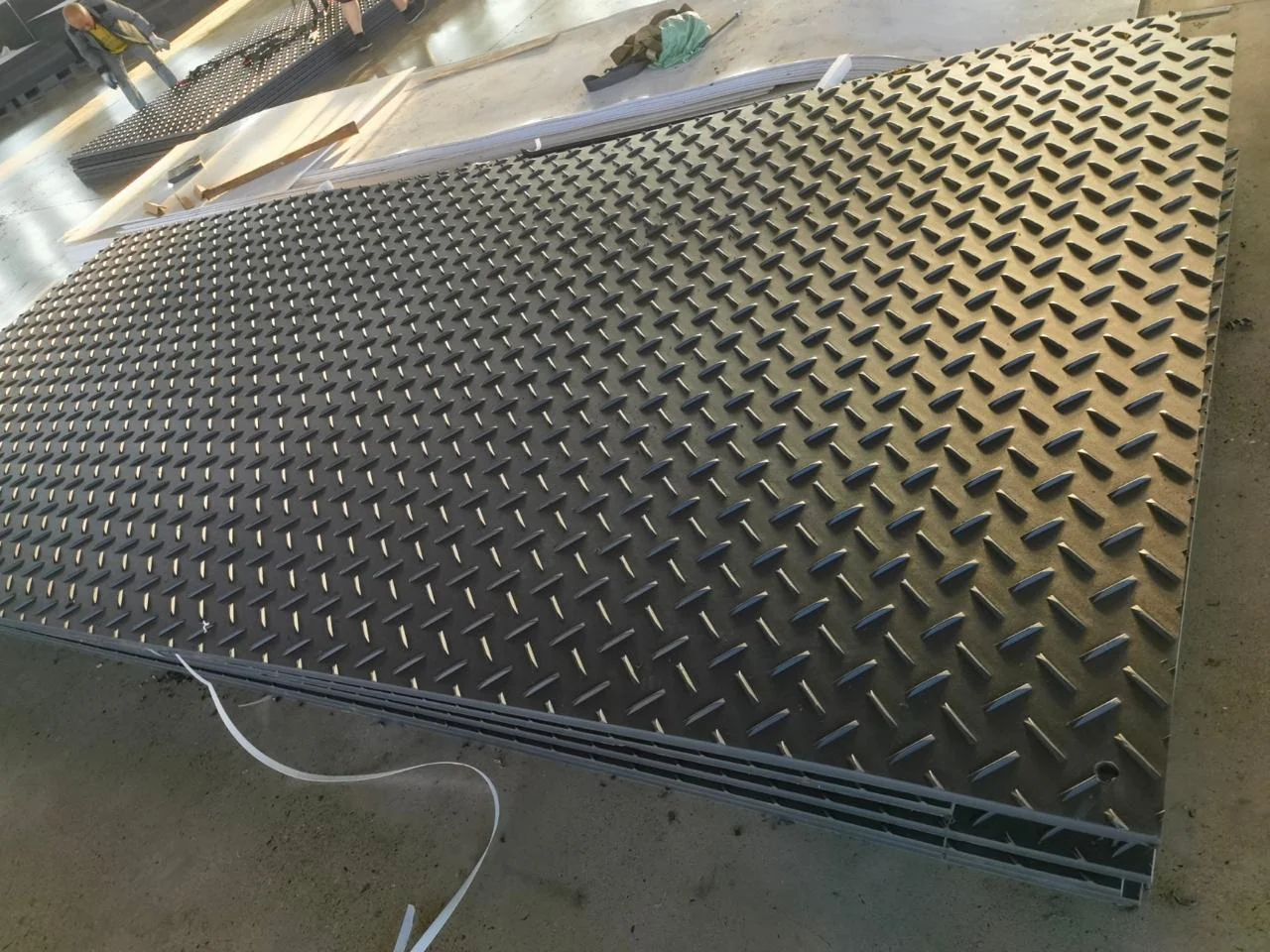
Textured surface of a temporary road mat
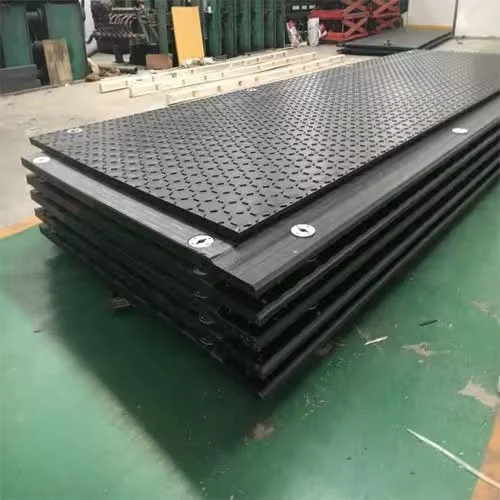
Stacked temporary road mats
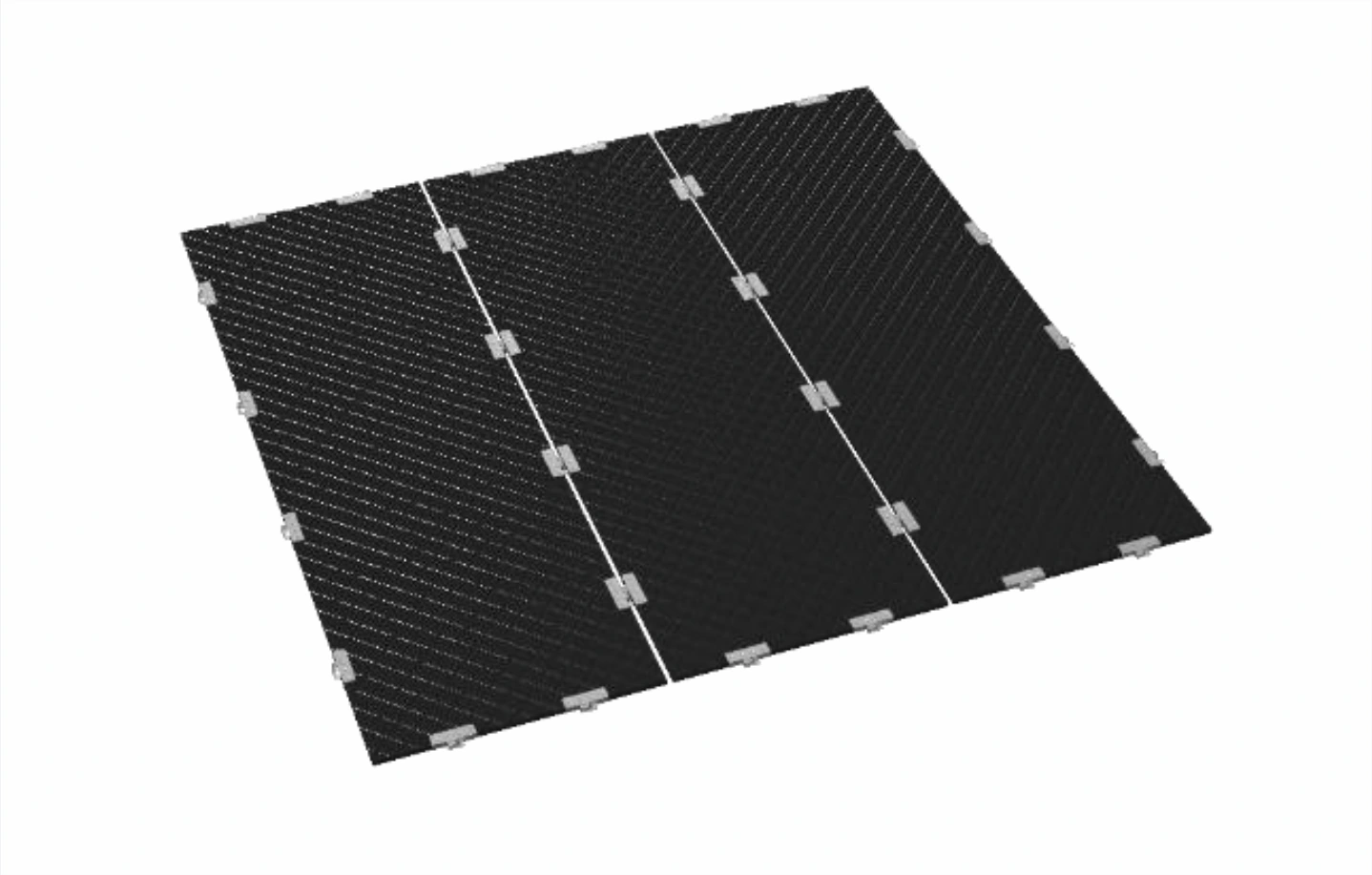
Modular mat layout
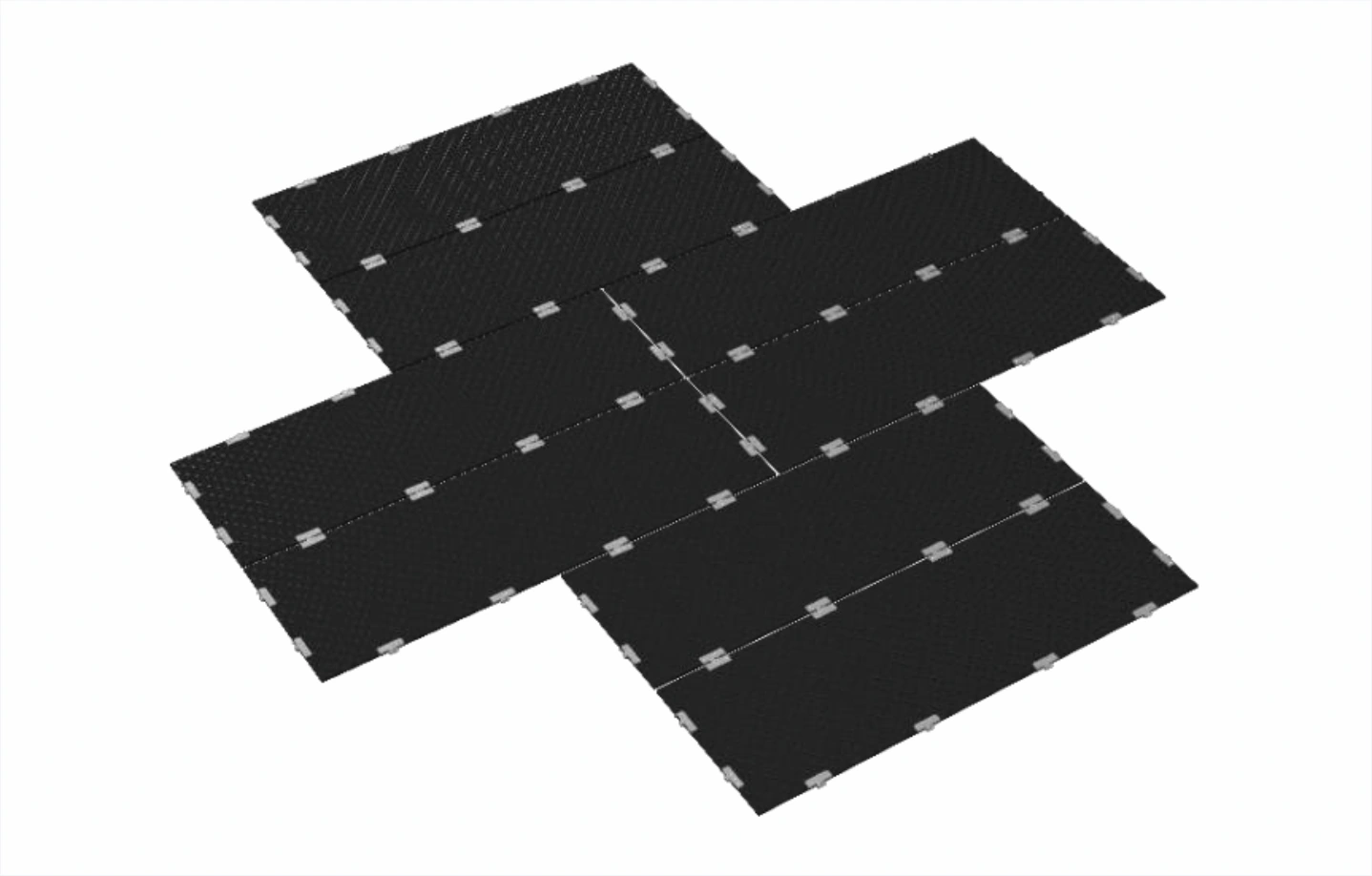
Cross-pattern layout
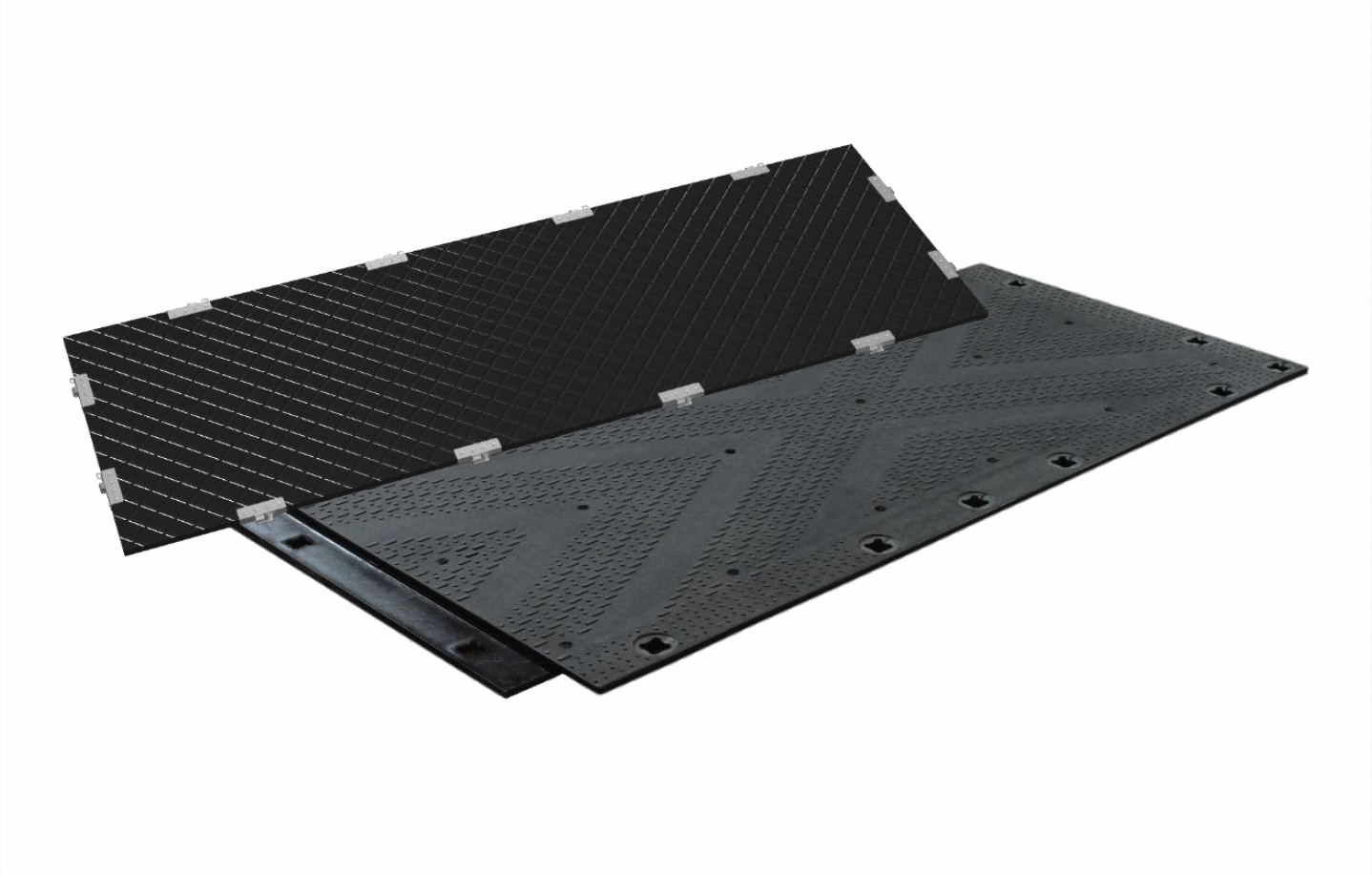
Joint between adjacent mats
Videos
 Applications
- Temporary access roads to construction and industrial sites.
- Working and turning areas for wheeled and tracked vehicles.
- Ground protection at temporary event sites.
- Vehicle access over weak or waterlogged soils using a model selected for the ground conditions.
 Benefits
- Interlocking modular panels can be arranged to suit the required access route or working area.
- The surface can be dismantled after the work is complete, and serviceable panels can be reused.
- The panels distribute vehicle contact loads and protect the ground surface when used within the agreed layout and design conditions.
 Installation
- Assess the condition and bearing capacity of the ground, vehicle loads, and turning or manoeuvring locations.
- Select the panel model and agree the layout, ground preparation and transitions to the existing access route.
- Lay the panels to the agreed plan and engage the connectors as instructed by the manufacturer. Check support at edges and joints.
- Inspect the surface during use. At the end of the work, remove the panels in the order set out in the dismantling plan.
Technical specifications
| Property | MDP-1 | MDP-2 | MDP-3 |
|---|---|---|---|
| Dimensions L × W × H, mm | 4,000 × 2,000 × 100 | 4,500 × 1,500 × 40 or 6,000 × 2,000 × 40 | 2,000 × 2,000 × 20 or 2,400 × 1,200 × 16 |
| Panel mass, kg, in the order of the dimensions listed | 400 ± 20 | 250 ± 20 or 500 ± 30 | 45 ± 5 or 35 ± 5 |
| Catalogue application | Access routes and work platforms on weak ground | Access routes and work platforms on load-bearing ground | Protective surface on load-bearing ground |
| Construction and connection | Interlocking polymer panels | Interlocking polymer panels | Interlocking polymer panels |
Dimensions and masses are from the KazPolimer catalogue. Confirm permissible loading for the selected model based on the ground, vehicle type and panel support layout.
Modular mats for temporary access
Temporary road mats are polymer panels fitted with connections. The modules can form an access route, a transition from an existing road or a work area on a construction site. Connections maintain the arrangement of adjacent panels, while the load from a vehicle passes through the mats to the ground. On a suitable subgrade, mats can help limit rutting and surface damage under managed traffic.
Route width, panel rows and the pattern of connections depend on where vehicles travel. A straight section can generally use a repeating layout. On bends and wider areas, account for the track followed by wheels or crawler tracks, the outside turning envelope and room to connect the mats. The product gallery shows layout and joint examples. Confirm the connection arrangement for the panel model being specified.
Access roads, work areas and turning points
Mats can provide temporary access to construction and industrial sites, support work along a linear corridor and help protect a surface that will be returned to its previous use. Within one site, an unloading area and a straight access road may have different loading demands. Along the route, consider repeated vehicle passes and turning movements. In a work area, consider where plant will stand, how long it will remain there and where it may impose concentrated loads.
Mark passing places, grades, entry points and locations where vehicles leave the mats. Turning and braking areas can require particular attention to connections and ground preparation. Review levels and edge stability where a permanent road meets a mat route. Where pedestrians share the area with vehicles, the traffic layout should separate their routes and account for traction and uneven transitions.
Selecting panels for the subgrade and load
Selection depends on how the load is distributed through wheels or tracks, the properties of the ground and the traffic pattern. The vehicle’s gross weight provides an initial indication. For a more useful assessment, identify the heaviest axle, wheel configuration, crawler contact area and expected frequency of use. If equipment has steel tracks, verify that direct contact with the mat surface is permitted for the model being considered.
Assess the bearing capacity, moisture, organic topsoil, grade and likely seasonal changes along the route. Weak or disturbed ground may require a levelling or load-distribution layer. A crane outrigger imposes a local load that warrants a separate assessment. The support arrangement depends on the outrigger reaction, the allowable ground pressure and the equipment requirements. Buried utilities, trenches and backfilled excavations should be identified so they can be considered in the design.
Laying, checking and removing the mats
Before placement, check the condition of the subgrade, the direction of drainage and areas where a panel might lose support. Set out the mats to reflect the line of traffic and the intended joint arrangement. At transition points, review restraints and levels against the layout. Confirm how the panels will be unloaded and handled according to their weight and lifting provisions. In constrained work areas, plan where stacks can be staged and how they will be brought to the placement area.
Inspect joints, tread surfaces and transitions before traffic begins. After heavy traffic or rainfall, review any changes in level, gaps between panels and support near the edges. When moving a route, check connectors and mats before assembling them again. Plan cleaning, stacking and collection around access and site conditions. Inspect the exposed ground after removal and compare it with records made before the work started.
What to send for a temporary road mat quotation
Send KazPolimer a route or work area plan, widths and lengths by section, turning geometry and equipment details. Include photographs of the ground, locations where water or ruts accumulate, unloading restrictions and the expected period of use. For a route with several changes of direction, show the intended direction of travel and turning locations. Mark places where vehicles park, unload or apply stationary loads.
A preliminary schedule can distinguish panels by row, connections at longer and shorter joints, components at transitions and an allowance for irregular geometry. Compare quotations using the effective area of a connected panel, shipment weight, connector quantities and the documented conditions for permissible loads. Include the location in Kazakhstan, installation sequence and required delivery date. These details link the proposed layout to the route, unloading arrangements and programme.
For routes installed in stages, record which panels will stay in place for deliveries after the main installation crew leaves. That schedule affects how many mats can be moved to the next work area and which connections must remain available for maintenance. Include the retained area in the quantity check for each stage.
Frequently asked questions
What are mobile road mats?
They are connectable panels for temporary access roads, work platforms and ground protection. After use they can be dismantled and inspected for reuse.
Where are mobile road mats used?
They provide temporary equipment access or protect existing surfaces at construction and industrial sites. The layout depends on the work planned.
How are road mats selected for weak ground?
Check bearing capacity, ground conditions when wet and the types of equipment using the route. Verify the suitability of the panels against the design of that route.